
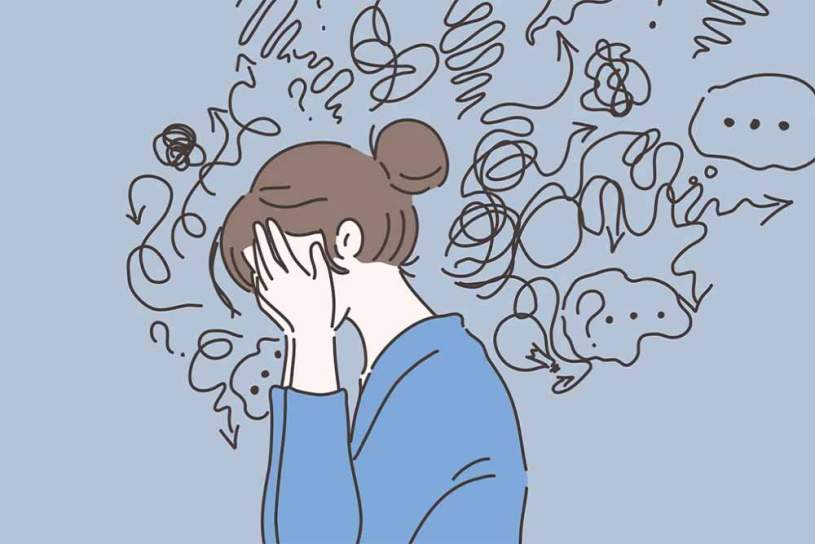
There are countless graphs and statistics I could post on the impact anxiety has on the multiple sclerosis community, and they would all differ. Most would say about one third of people with MS will struggle with anxiety. Some will say over half. While they may not all agree on the specifics, they do all show one important fact. Anxiety, along with depression, is extremely prevalent in people with MS, more so than other chronic illnesses.
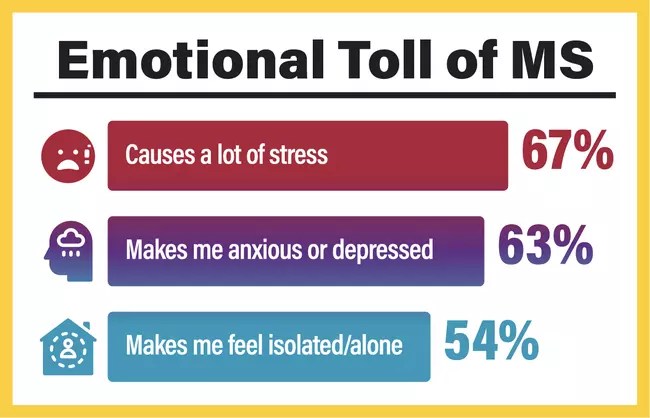
I believe the first contributing factor to my anxiety was intense worry. I was consumed by it, I still am. With an MS diagnosis comes, what feels like, a million unknowns. It is a disease characterized by uncertainty and unpredictability. I was unsure of practically everything. I didn’t know why this had happened to me. I didn’t know if my symptoms were going to get worse or better. I didn’t know which medicine I should take, or if I should take any medicine at all. I didn’t know whether to tell people or keep it secret. I didn’t know if I would be able to continue to do the things I love. I worried about EVERYTHING.
While intense worry lit the fire, it was lifestyle change that fueled it. For me, the worst part was when MS robbed me of my ability to enjoy the things I once lived for. I was extremely active and loved the outdoors. Weekends meant hours of hiking one day, followed by hours of mountain biking the next. If the weather was too bad, that meant I got to move inside for weight training, which I enjoyed just as much. I believe one of the reasons my diagnosis blindsided me so badly was because I was possibly in the best shape of my life at the time.
Since MS, I am still able to remain active. However, on a much smaller scale. Fifteen-mile hikes turned into three-mile hikes, long mountain bike rides turned into short, paved trail rides, and five -mile runs turned into half mile shuffles.
My anxiety is most unbearable on nice, sunny days. They completely paralyze me. I avoid the outdoors at all costs. I want to do the things I love and miss, but I can’t, so I choose to do nothing. The little sun icon in the weather forecast I used to look forward to now stresses me out. Beautiful weekends have sometimes meant parking my car when I get home from work on Friday and not going back out until Monday morning.
Avoidance is a typical response to excessive fear and anxiety. One of the first ways to overcome it is to recognize you are doing it. While it seems obvious now, that wasn’t always the case. At the time, all I knew was that the things I used to love to do now caused me to cry and, for lack of better words, freak out.
Everyone’s MS symptoms are unique. For me, I am able to function normally for a brief period, then my symptoms kick in. For example, I can walk perfectly fine on flat ground for nearly a mile before I start limping. By the second mile, my arm will be contracted. After that, the entire right side of my body starts to lose function and that’s when I freak out.
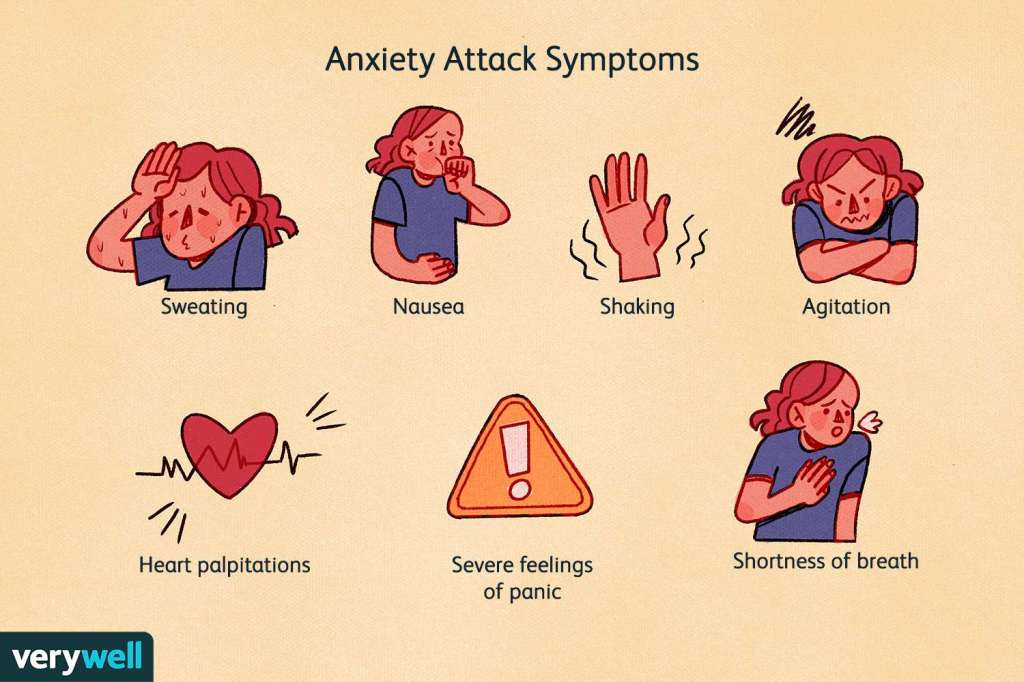
Now I realize I’m not necessarily freaking out, but I am having anxiety attacks and knowing that gives me the chance to properly do something about them.
Things that help me:
- Stop what you are currently doing. Most likely you are having an attack because you are in a stressful situation. For me, that often means stopping my ride and getting off my bike to sit down or stopping my hike to sit. At home, it usually means walking out of the room I am currently in.
- Controlled breathing. An anxiety attack means having shortness of breath and it is important to regain control of your lungs. Breathe in as slowly and deeply as you can through your nose. Then, breathe out as slowly and deeply as you can through your mouth. This takes time to control. Your breath is going to feel rapid, and it is going to take a few moments before you are able to slow it down enough to control.
- Place one hand over your chest and one hand over your abdomen. Feel your breath move in and out. More importantly, feel it slow as you regain control over your breathing.
If you are with someone who is having an anxiety attack:
- Be calm and patient.
- Sit with them. Do not hover or pace.
- Remind them to focus on their breath.
- Strike up a conversation. Talking helps refocus the mind and engages the lungs to better control breathing.
I do contribute my anxiety to external factors, however that is not the case for everyone with MS. As I said earlier, anxiety and depression are more common in MS that any other chronic illnesses. There are even reports that rates of depression are higher in MS than people suffering from terminal cancer. While lifestyle change and fear of the unknown play a huge role in anxiety and depression, for those with MS it may also be an effect of the disease itself. It is possible that damage done to the brain by MS can be the cause of depression and/or anxiety. Depression is also a common side effect in some of the most common MS drug therapies.
I wish I was writing this post to tell you how I recovered form anxiety and to let you know how well I am doing. I wish I had a thousand words of advice on how you can do it, too. Unfortunately, that isn’t the case. I realize now what I am up against and that is a huge first step in my fight. What I will advise you to do, or actually beg you to do, is ask for help. In the span of a year, I had countless appointments and had full blown anxiety attacks in front of more than ten healthcare providers. Only one of them said something about it. Don’t count on others to help you, you may be waiting a while.
 (M)y (S)tory