

Fall is in the air. It was always my favorite time of year to enjoy the outdoors. I loved getting up on the weekend before the rest of the world and walking through a foggy wood with the sun rising up through the trees. I could hike for miles as countless hours ticked by. I miss that. I miss trudging along on a gravel road with rock formations hovering overhead and knowing a few miles ahead is a beautiful waterfall I have never seen before. Just as much as I miss meandering along a trail in the woods and having no idea what is around the next corner. I want to have those feelings again. I know it will never be like it was before. I know it will require a lot more effort on my part, but it is important enough to me to put in the work and try.
I am always on the lookout for the next thing that might give me a leg up, literally, with my multiple sclerosis. I wear an ankle foot orthotic (AFO) to help keep my foot up. I wear a functional electrical stimulation (FES) device to help pick my knee up. It still is not enough to get me back to the outdoors I miss so much. A lot of the problems I have with walking stem from my hip. My hip flexors are no longer able to get the full message from my brain. I have all of these devices that do so much to keep me moving, but if my hip is not able to flex enough to lift my leg from the ground, those devices cannot help me to their full potential.
A few weeks ago, I was actively searching for something to help. My preference is physical therapy, but I had been doing hip strengthening exercises and stretches at home with no noticeable difference in my gait. I could tell my hips were getting stronger. I was adding resistance and doing more reps, but it made no difference when it came to walking. I would still drag my right leg along the ground shortly after a mile. I came across the hip flexion assist device (HFAD). I was immediately intrigued and wondered if it would work for me.
My research looked positive. The HFAD has been proven beneficial for patients with MS who are still ambulatory but have difficulty initiating leg swing due to weak hip flexors. It is applied in cases where the patient has tried an AFO, but continues to have difficulty walking, such as dragging the weaker leg with compensatory movements. Compensatory movements, all of which I do, include, vaulting (raising the heel of the stronger leg to make it easier to swing the weaker leg forward), circumduction (swinging the leg out to the side as it moves forward), and hip hiking (body raises up on affected side to help lift the leg forward). Reading the clinical applications for the device felt as if it had been specifically made me for me. I had to learn more.
The HFAD works by generating a force to help assist with hip, knee, and ankle flexion. There are two dynamic tension bands that, depending on the device, either attach to the wearer’s shoe or foot. The tension device runs up the front on either side of the leg to connect to a waist band. As the wearer fully extends the leg, tension is created across the bands. Relieving that tension by taking a step helps flex the hip, knee, and ankle and in turn raises the foot from the ground.
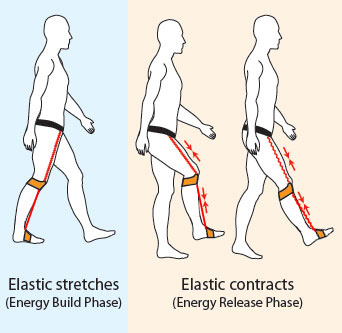
I searched for reviews online. There were not very many. What I was able to find was very positive. One person raved about how much further and faster they were able to walk. Another reported overall strengthening in the leg and walking better now than before they had the device. The only negatives I could find were in regard to how hard it could be to put on and take off, and how cumbersome it was to work around when going to the restroom.
That was enough for me to want to give it a go. I contacted my orthotist to get her opinion of the device. She replied she had never fitted anyone for an HFAD. Her opinion was that most people did not seek out the device due to its difficult in donning, though she was more than happy to contact the manufacturer to get a device in for me to do an in-office trial. We then had the usual discussion about insurance. According to Anthem, it is not medically necessary and therefore I would be paying out of pocket.
My orthotist emailed me shortly after to let me know she had received an HFAD for me to trial. I would have to decide if the HFAD would be beneficial on rock and root covered trails by walking around a field behind the office building. I would also have to decide if it would help climbing up and down hills based on how it felt on the stairwell.
I arrived at the office. I was excited but have been at this long enough to know not to get my hopes up. Mobility aids help, but they don’t work miracles and right now I’m starting to feel like a miracle is the only thing that is going to help me.
The device was not overwhelming, but it was bulkier than I had anticipated. We started by wrapping the waist belt just above my hips. My hips are what is going to hold the contraption up and keep it from sliding down my leg as I step. Then we loosen my shoelaces on the right shoe and slide a strap underneath them. This is what is going to pull my leg up as I step. Then two long black tubes with round resistance type bands inside them are lined up on either side of my right leg. The tubes run from the waist band to my shoe.
The tension on the bands is easily adjusted and we tightened mine a few times before I felt like I was feeling the benefit. I was dragging my foot worse than ever as I walked circles around the large exam room. I was giving my leg over to the device in hopes it would work a miracle and I would not have to concentrate on every step I took. Unfortunately, there were no miracles happening that day. You still have to think about your steps, The HFAD does not do the work for you. Like all other mobility aids, it just lends some assistance.
Once I learned how to let the HFAD help me and I was able to lift my foot from the ground, we moved to the stairwell. That was a special treat! I was almost in tears as the device reminded me what it used to be like to climb steps. My knee was lifting in the air almost effortlessly. My toes clearing the edges of the steps with ease. Up and down I went until it was time to move outside.
We walked through the grassy field behind the office. I hate walking through grass. When you can’t pick your leg up high enough for your foot to clear what you are stepping through you get resistance and it is very tiring. That was not the case when I was wearing the HFAD. My foot lifted above the grass. I was not walking fast, but I could tell I was moving with much more ease.
One negative I noticed is how uncomfortable it is to have the waist band being pulled down on your hips each step. The device itself is also very fatiguing. I was so worn out from wearing it for fifteen minutes that I was not able to move my leg at all after it was removed. The manufacturer recommends only wearing it for an hour a day for the first week and to slowly increase your time in it.
I have decided to purchase it and give it a go. I will post again once I have worn the device and have a better idea of it. I know it isn’t my miracle, but fingers crossed it does help. Please share if you have had any experience wearing an HFAD and what it was able to do for you.
Cover photo: https://www.everydayhealth.com/columns/smart-health/tried-hip-flexion-assist-device-ms-symptoms-leg-got-lift/
 (M)y (S)tory