

Wadi means valley in Arabic. Wadi Rum is the largest wadi in Jordan. It is also known as the Valley of the Moon. Wadi Rum is most known for its link to Lawrence of Arabia. Currently, the valley is inhabited by the Zalabieh tribe who have developed eco-tourism services throughout the area. There are 4×4 tours, camel rides, and Arabian horse rides. You can hike, mountain climb, and star gaze from a bedouin-style glamping tent. Our visit would consist of a 4×4 ride, a stop for tea and supplies, a camel ride, and an authentic-style Jordanian lunch.
Our morning started as we were greeted by our Bedouin guide. He led us to our 4×4 and we piled in the back. The drive across the desert was slower than I had anticipated, but I was happy for the opportunity to take in the scenery and snap plenty of pics and videos of the landscape unfolding before us.
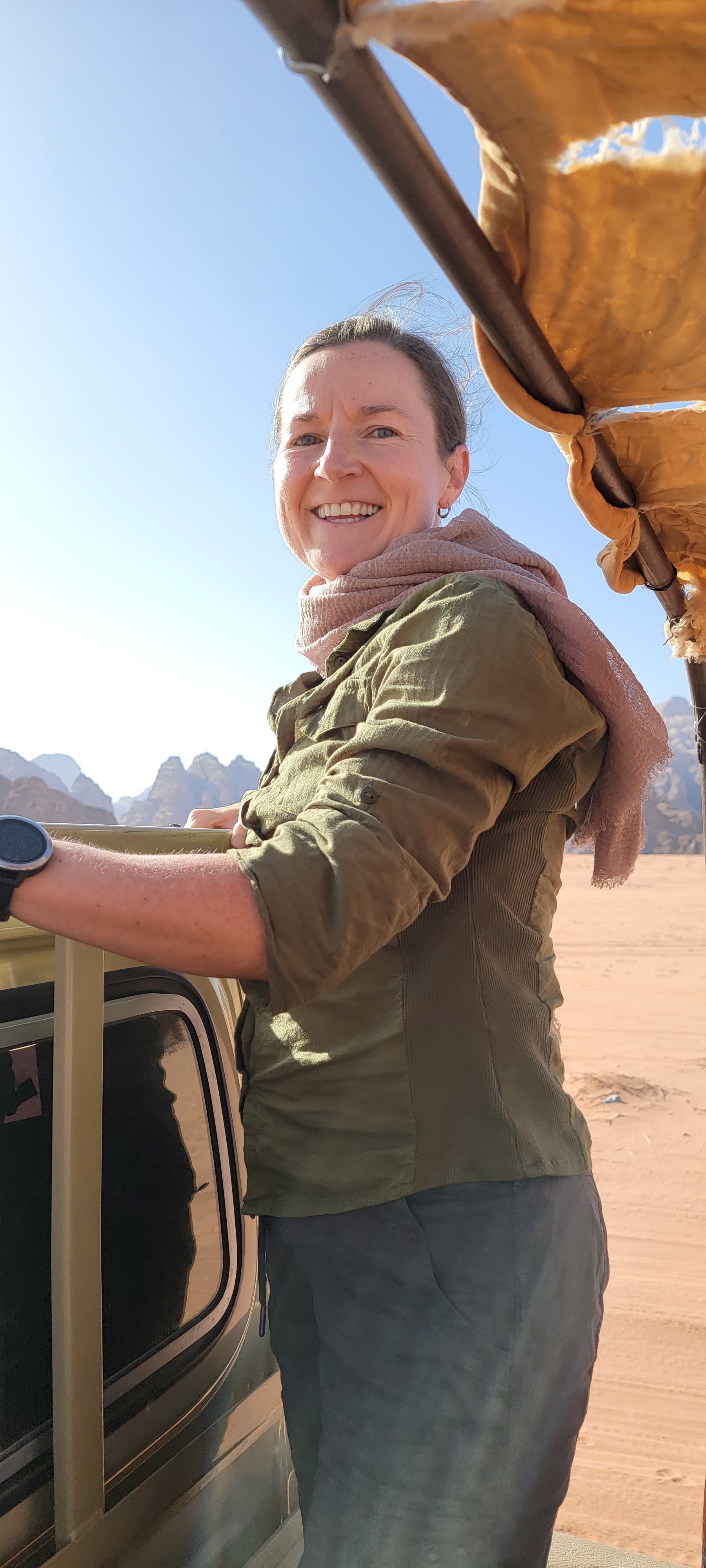
Shortly we came to a stop. We were instructed to remove our shoes and socks. Our guide told us walking in the sand at Wadi Rum was something we had to experience. For me, this meant removing my AFO, as well. Sand and foot drop do not play well together. Nevertheless, it did not appear we were going too far from the truck and this was an experience I did not want to pass up.
We meandered around barefoot in the sand along the bases of towering rock formations. It was a wonderful treat. I minded not to venture too far. Walking without my AFO, especially in the sand, is exhausting. I strolled aimlessly in the sand leaving odd footprints as I drug my right foot along behind me.

Back in the truck, we dusted off the sand and headed onward. As we approached our next stop, we could see a bedouin tent on the right and camels basking in the sun to our left. We hopped out of the truck and ventured into the tent. There was an abundance of goods for sale laid out on the tables. The locals were offering teas, knick-knacks, soaps, scarves, and other handmade crafts. After tea and stories, we went shopping under the tent and bought plenty. Then they showed us how to properly tie the scarves around our heads to block the sun and sand. We were ready for our camel ride.
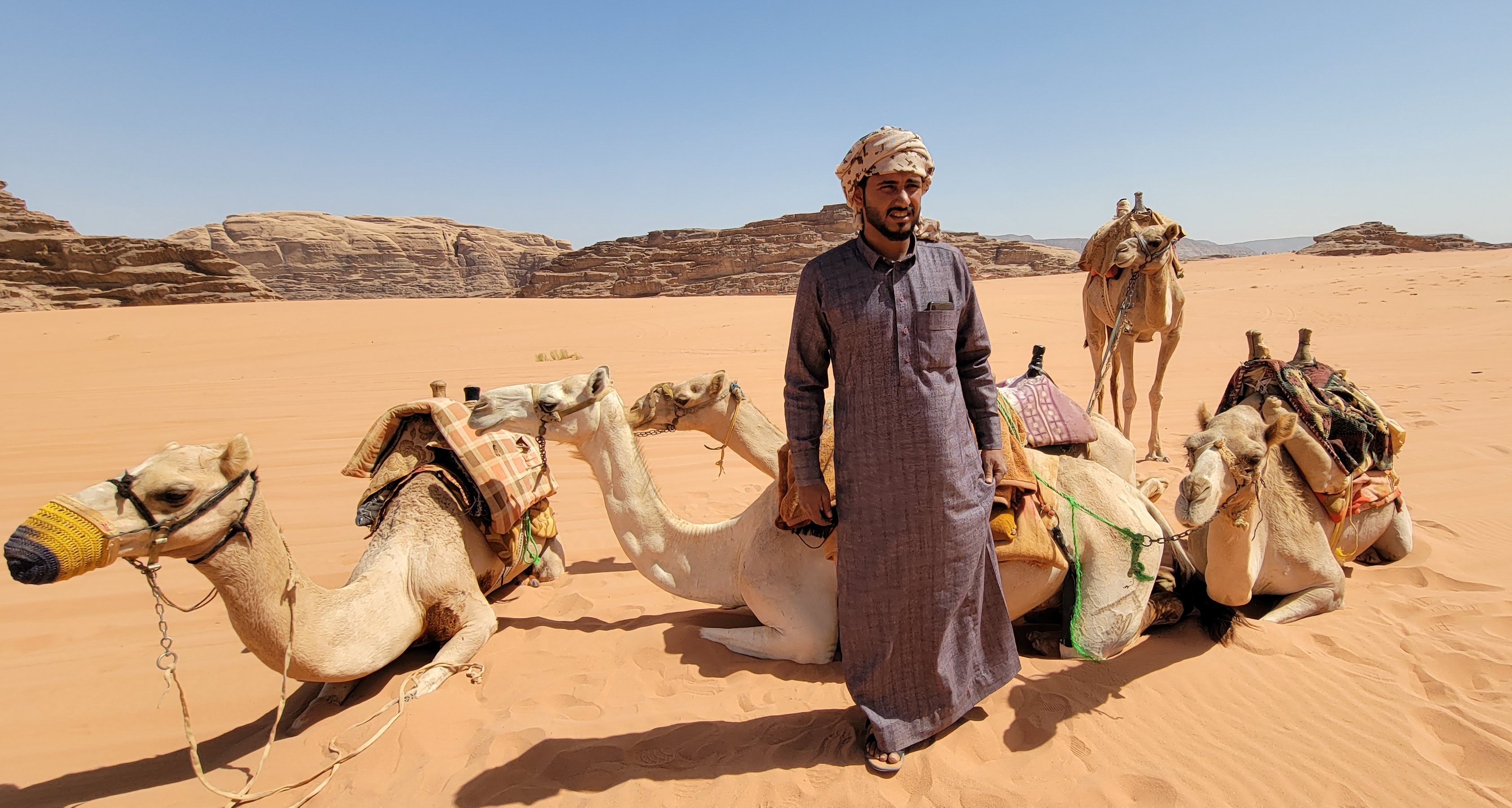
I am not sure what the most difficult part was. Getting on the camel, the actual ride, and dismounting all offered unique challenges. To mount, they had the camel positioned so I would be throwing my right leg over its back. That was not happening. I had no intention of explaining this to the nice gentleman holding the camel and simply asked if I could mount from the other side. He seemed unsure as to why I was making it difficult but was fine with me throwing my left leg over instead. I walked to the other side of the huge animal and managed my leg over its back. Before I could get settled onto the saddle, the camel rose from the ground and I was suddenly seven feet in the air.
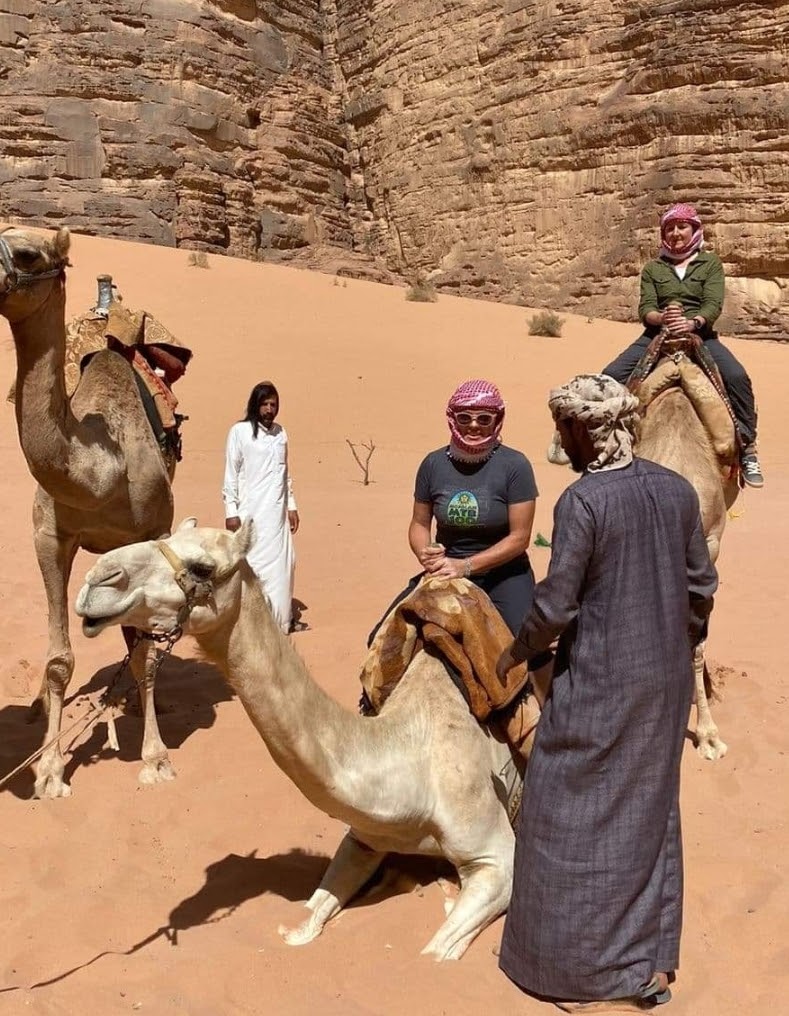
The ride was awkward. For the most part, it had nothing to do with my multiple sclerosis. I have never been comfortable on or around large animals and this camel was not going to be any different. As we ventured across the sand, I could feel the right side of my body start to fatigue. I did not feel in danger of falling, it was simply very tiring. I wondered if the animal could tell a difference. I mentioned my symptoms but did not want to make a big deal about it. I wanted to enjoy the moment and let others enjoy their moments, as well.
When it came time to dismount the camel, I was helpless at hiding my need for assistance. The entire right side of my body felt like jello. As my camel eased itself to the sand, I used what strength was left in my arms to scoop underneath my right leg and lift it over. My plan had been to simply slide down and land on my left foot. I would have a soft landing in the sand if it did not go to plan. Before I was able to get my right leg up and over, our tour guide was by my side. He scooped me up from the saddle and set me safely on the ground. I do not ask for help unless I need it. I also do not turn help down when it is offered out of kindness. I could have gotten down on my own, but in the end, I was thankful for his kindness.
Back in the truck, the only thing left to do was have lunch. We ventured to our lunch spot and were treated to a presentation of how the locals cook zarb. A pit is dug in the ground and filled with hot coals. The food is lowered into the pit, buried in the ground, and left to cook.


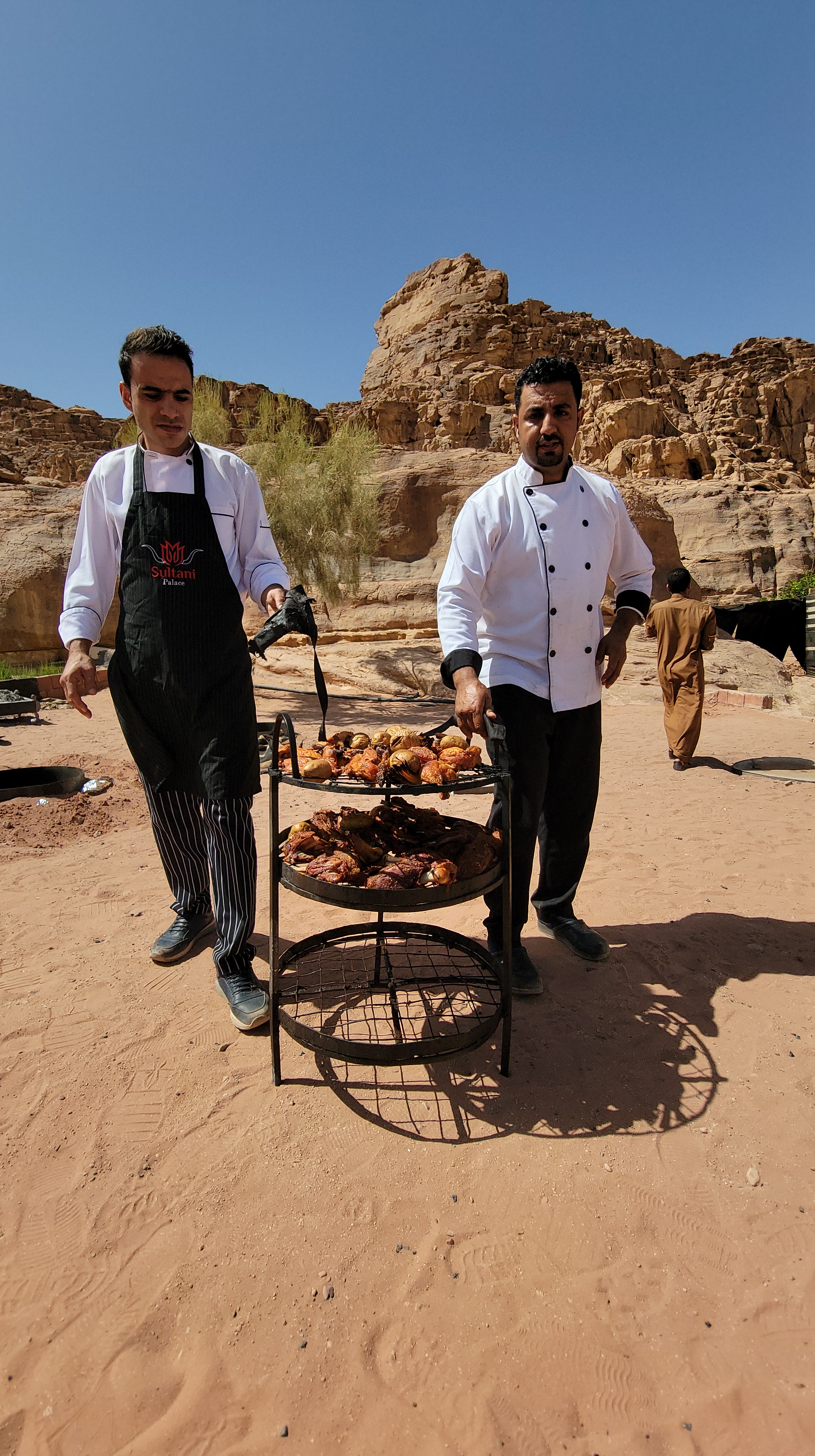
I enjoyed my lunch in an air-conditioned tent with friends. My MS had caused little to no issues and I was grateful. For most people with MS, heat is a foe. I have that problem, too. But, in the end, the abundance of sunshine and vitamin D in the desert trumped any ill effects. I was very much enjoying my time in Jordan and was sad it was soon coming to an end.
 (M)y (S)tory