
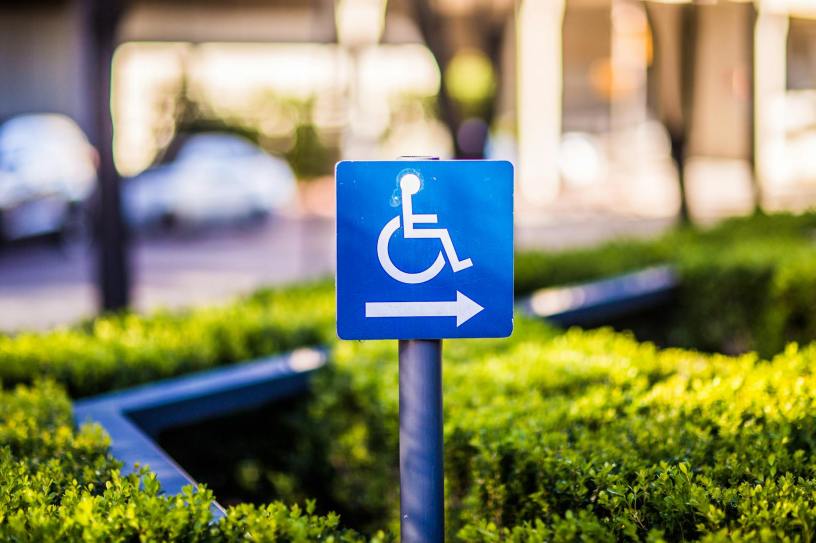
Earlier this year I applied for a disabled-accessible parking permit at work. It was overdue. I struggled with the decision because I enjoyed the morning walk into work from the parking garage. However, leaving work and returning to my car was becoming too difficult. The parking garage is nearly half a mile away. It was becoming treacherous for me to trek that far after a full day on the job. I also put the decision off out of stubbornness. I did not want to admit that after only four years of living with multiple sclerosis my condition had advanced this far and this fast. I refused to accept that I was now incapable of a short walk. Less than five years ago I walked mile after mile for fun. The disease took hiking away from me. Now it was going after my simple strolls down the sidewalk.
Another reason I pushed the decision was because I did not want to give up the exercise the walk to and from the parking garage afforded me. I was too scared that giving up those extra steps would be the beginning of the end. I would slowly go from 12,000 steps a day to 10,000. Next it would be 8,000 and then 6,000. After that, I would have no place to go but a wheelchair. It sounds like a drastic thought, but if you live with a disabling condition it really is not that far-fetched of an idea.
After accepting the truth about my mobility, I applied for a permit. It was a process. I had to state why I needed the permit. They required specifics about mobility aids. They needed to know how far I was able to walk. They wanted a diagnosis. After completing the form, it had to be sent to one of my many doctors. They needed to attach documentation from my medical chart to confirm my inability to walk. The difficulty of applying was also one of the reasons for my procrastination.
I forwarded everything along to my primary care provider and the next week received this:
Dear Shanna,
The Application Review Committee for Parking for People with Disabilities has recently reviewed
your application for a disabled-accessible parking permit. The Committee has determined that,
according to KRS 186.042, you are eligible to receive a disabled parking permit until 12/31/2024
based on your current disability or medical condition.
I was livid. Did they believe this chronic and debilitating condition was going to magically cure itself by the end of the year? I would have to go through the entire process again in just a few months. It was insulting and hurtful.
Nevertheless, I picked up my new permit. I went from a seventeen-minute walk to my car to a five-minute walk. It was great and something I definitely did not want to give up. My worries about losing out on the exercise and steps melted away. They were replaced with relief as I no longer worried about falling on the long walk after work on tired legs.
So, on December 1st, I went through the process again. It was much quicker now that I knew the ins and outs. A few days after giving my PCP the forms to complete, I received this.
Dear Shanna,
The Application Review Committee for Parking for People with Disabilities has recently reviewed
your application for a disabled-accessible parking permit. The Committee has determined that,
according to KRS 186.042, you are eligible to receive a disabled-accessible parking permit for an
indefinite period at the University of Kentucky based on a permanent disability or medical
condition.
That last sentence shook me. “You are eligible to receive a disabled-accessible parking permit for an
indefinite period at the University of Kentucky based on a permanent disability”. Not so much the entire sentence, but two specific words, indefinite and permanent.
I am four years in with this disease. I have zero reservations about the fact I will live with it for the rest of my life. I know MS is indefinite and my disabilities are permanent. There was just something about the wording in the letter that slapped me across the face.
I got what I wanted. I got my permanent parking permit. I understand the irony of being upset the first time. I was angry they did not think my disability was permanent enough to warrant a long-term permit. Four months later I am equally upset that they do think it is permanent.
This is part of the disease. Your moods and emotions are rarely yours to control. I constantly live with fluctuating symptoms. I can walk three miles one day and some days I question if I will even be able to lift myself out of bed. Those three-mile days are an issue. They give you this hope. You beat yourself up trying to think what you did right to make it possible. The next day that you can hardly drag yourself out of bed you beat yourself up trying to think what you did wrong. Those good days give you hope. I have learned it is a fleeting hope.
I have worked hard over the years to accept this new life of being disabled, It has been especially hard because I was capable of so much before. One of the biggest hurdles in my acceptance has been the permanence of the disease. To accept that one day I got sick and I will never get better. I do not need reminders. MS is with me every breath I take. I am always aware of its presence and the damage it has done to me.
I suspect the letter upset me because it was a reminder.
- If you or someone you know is struggling or in crisis, help is available. Call or text 988 or chat 988lifeline.org
- Disaster Distress Helpline: CALL or TEXT 1-800-985-5990 (press 2 for Spanish
 (M)y (S)tory